
CAREER OPTIONS FOR NEWLY QUALIFIED MBBS GRADUATES IN INDIA
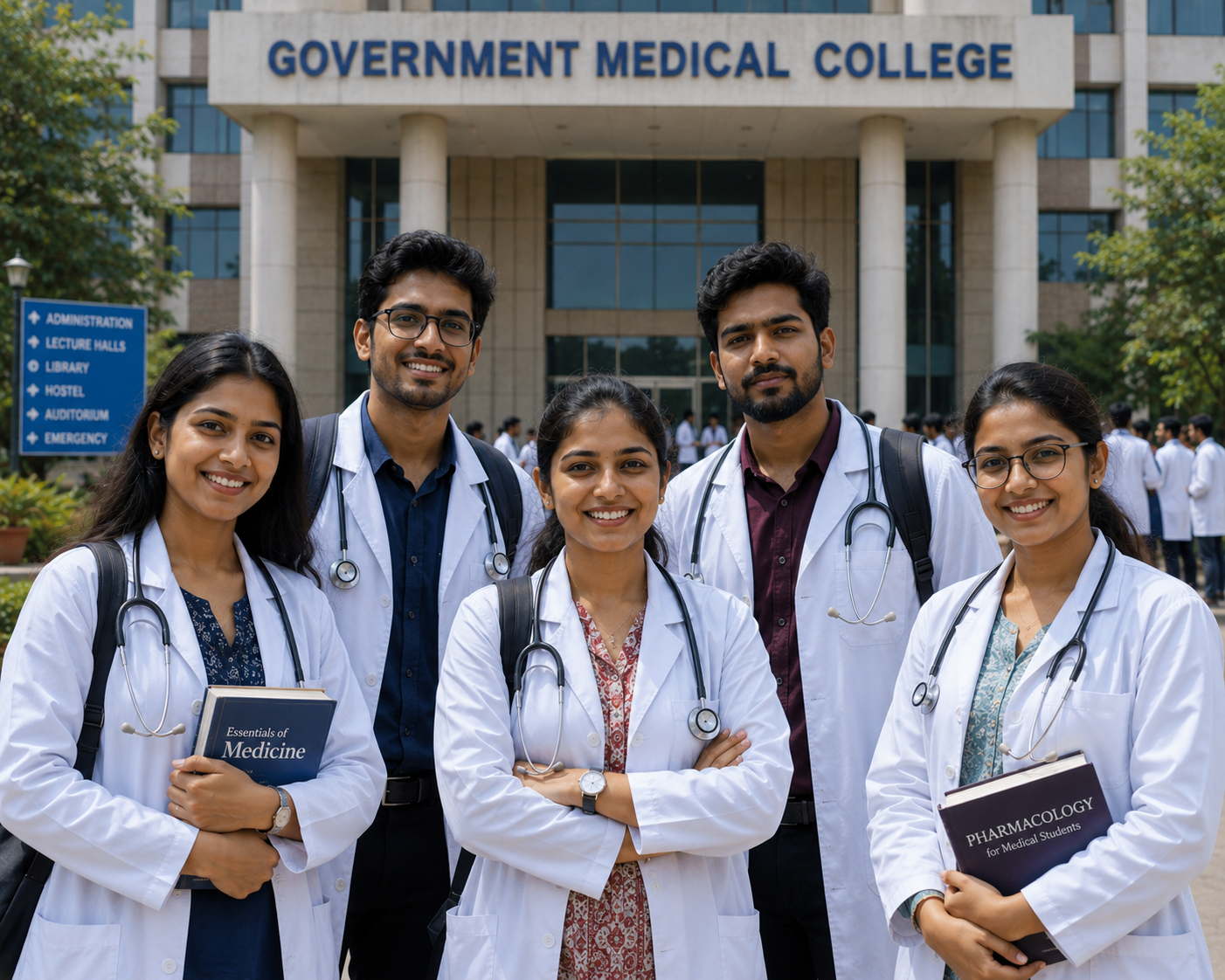
CAREER OPTIONS FOR NEWLY QUALIFIED MBBS GRADUATES IN INDIA
A common question faced by medical students as they near the end of their undergraduate course is: “What comes next?” From clinical training and practice to opportunities in research, public health, and management, an MBBS degree opens the door to a wide range of pathways. As the choices made at this stage often play a defining role in one’s career, having a clear understanding of all the available prospects is essential.
Career Pathways in India after MBBS
● Postgraduate pathway
Postgraduate specialisation is one of the most sought-after paths following MBBS. Specialisation offers increased medical knowledge and clinical skills, and brings better work opportunities, pay, and career stability.
Examinations conducted for admission to postgraduate courses in India include:
o NEET PG (National Eligibility cum Entrance Test – Postgraduate): National-level computer-based assessment conducted annually for admission to MD/MS/DNB/Diploma courses throughout India, excluding seats at INIs (Institutes of National Importance)
o INI-CET (Institute of National Importance - Combined Entrance Test): National-level examination conducted twice a year for admission to postgraduate courses (MD/MS/6-year DM/MCh) in INIs, which include AIIMS, JIPMER, PGIMER, NIMHANS
These exams cover admission to both clinical and non-clinical branches after MBBS. Clinical branches play a direct role in clinical decision-making and patient care, whereas non-clinical branches offer several opportunities in diagnostics, research, and academia.
▪ Clinical Practice
MBBS graduates can directly enter clinical practice in clinics and private medical centres. Several centres offer contract-based roles for general practice.
▪ Government Services
There are multiple opportunities to enter government services after MBBS.
- UPSC CMSE (Combined Medical Services Examination) – National-level examination for recruitment of Medical Officers into Central Health Service, Indian Railways Health Service, Municipal organisations, ESIC, and other services.
- AFMS (Armed Forces Medical Services) – Recruitment into the Army Medical Corps (AMC) through Short Service Commission (SSC) for the Army, Navy, and Air Force
- State Health Services – PSC examinations are conducted by the respective states for the recruitment of Duty Medical Officers/Assistant Surgeon roles. State Health Departments/DHS also recruit for contractual roles.
- National Health Mission (NHM) – Recruits Medical Officers for contract-based roles at the level of State/District
- Public Sector Undertakings (PSU) – Recruitment for Medical Officer/Assistant Surgeon roles, for companies like BHEL, Coal India, BEL, and other government-based enterprises.
International Opportunities
Working or studying abroad can bring wider exposure, better training structures and improved work-life balance. Countries such as the USA, UK, Australia, and New Zealand are popular choices for graduates seeking opportunities abroad. Most countries require clearing licensing exams, proof of language, and registration with their medical council.
● USMLE (United States Medical Licensing Examination) – Licensing examination pathway required for clinical practice and education in the USA. Requires clearing Step 1 and Step 2 CK for ECFMG certification. Residency applications are made through the NRMP match process, and Step 3 is required to obtain an unrestricted medical license.
● PLAB (Professional and Linguistics Assessment Board) – Licensing exam required to work in the UK NHS (National Health Service). Requires clearing an English language proficiency examination, PLAB Part 1 and 2, and completing GMC (General Medical Council) registration
● Alternatively, clearing the relevant Royal College examinations (e.g. MRCP, MRCS, MRCOG, MRCEM) also provides a pathway to GMC registration. Structured programs like IMT (Internal Medicine Training) and RCOG training in India, provide UK aligned clinical training and support the completion of relevant Royal College Examinations by the end of the program
● AMC (Australian Medical Council) – Requires clearing an English language proficiency test, the AMC MCQ exam, AMC Clinical or Workplace Based Assessment (WBA) and registering with the Medical Board of Australia (AHPRA)
● NZREX (New Zealand Registration Examination) – Requires clearing an English language proficiency test, a relevant licensing exam and NZREX Clinical Examination to register with the Medical Council of New Zealand (MCNZ)
Non-Clinical Career Options:
Alongside the traditional clinical pathways, an MBBS degree also opens up possibilities beyond conventional clinical practice. Graduates drawn to research, writing and healthcare management can pursue these pathways and use their medical knowledge to build flexible careers.
● Healthcare Management and Hospital Administration – MBA in Healthcare Management can lead to roles in the administration and management of healthcare institutions and health operations
● Medical Writing – An essential aspect of healthcare communication, which involves creating scientific documents, educational material, marketing content and translating medical data into language that is easily understood by the public.
● Health Informatics – Integrates medicine with IT and data analysis to improve digital healthcare systems. Involves roles in health data analytics and digital health, and positions in health-tech companies.
● Research – Institutes like AIIMS, IIT, IISc, PGIMER offer PhD for MBBS graduates to pursue research. Involves career roles as clinical scientists and consultants in the pharmaceutical and biotech industries
● Public Health and Epidemiology – Master of Public Health (MPH) based careers, involving epidemiology and working in public health roles for organisations like the WHO, CDC, and managing public health programmes.
● Pharmaceutical Industry – Graduates can enter roles in pharmacovigilance, act as medical science liaisons and enter clinical research
● UPSC Civil Services – Those with strong interests in administrative roles and public policy-making can consider the UPSC CSE (Civil Services Examination) to enter services such as the Indian Administrative Service (IAS), Indian Police Service (IPS) or the Indian Foreign Service (IFS)
The career options available after MBBS are diverse and constantly evolving, each with its own set of challenges and gains. The most rewarding path is the one that aligns with your long-term goals and, most importantly, gives you satisfaction and fulfilment.